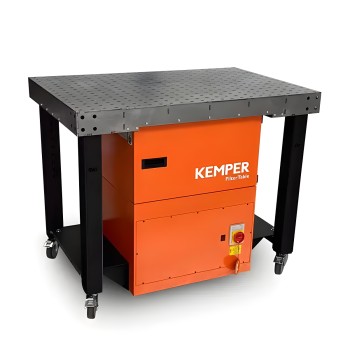
The welding table is the welder's essential workspace: a robust, conductive and perforated surface on which to position, clamp and assemble workpieces. Also known as a welding bench or welder's workbench, it improves the precision, safety and quality of assemblies. Discover our selection of welding tables and their accessories.
What is a welding table used for?
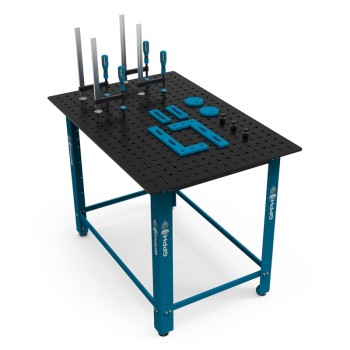
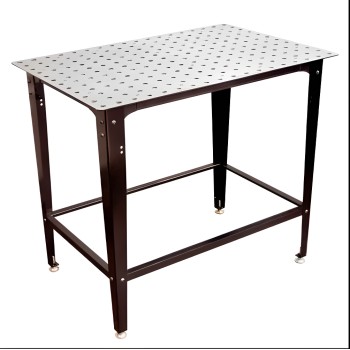
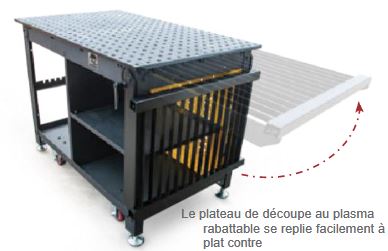
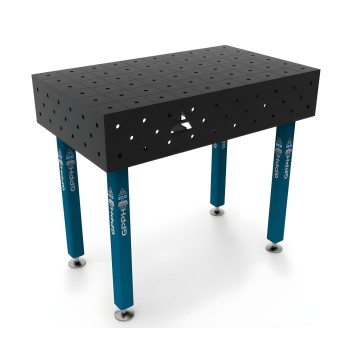
A welding table provides a flat, stable surface, generally made of thick steel, on which workpieces are prepared and assembled. Its conductivity allows the ground clamp to be connected directly, and its regularly spaced holes accommodate clamps, squares and clamping accessories. Working on a welding table rather than an improvised support guarantees square assemblies and better control of distortion.
The hole system
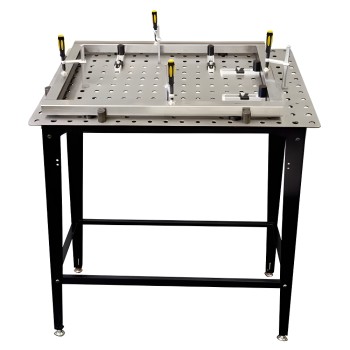
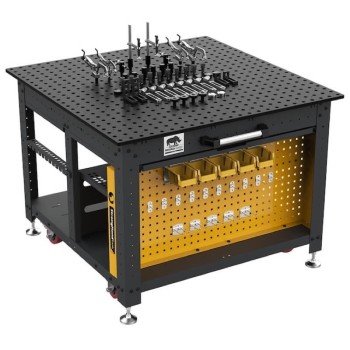
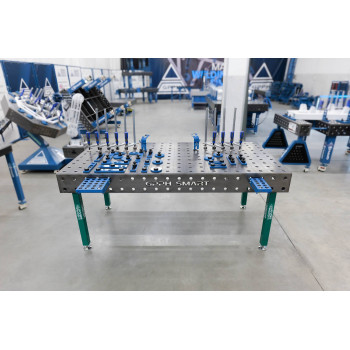
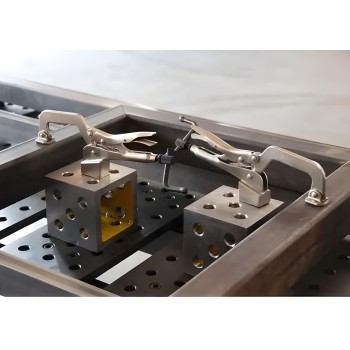
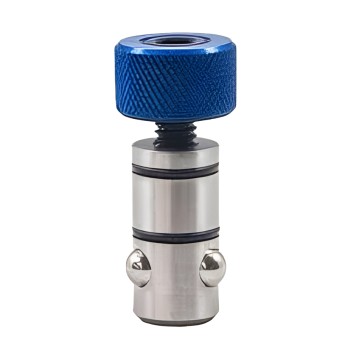
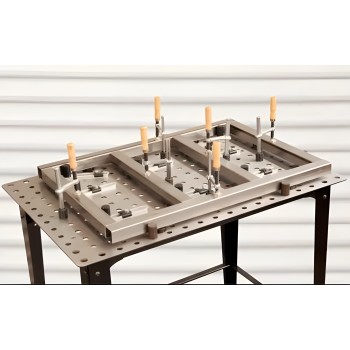
Most professional tables have a grid of holes (often 16 or 28 mm in diameter) regularly spaced. This modular system is the great strength of the welder's table: it allows pieces to be quickly secured with toggle clamps, stops and magnetic positioners and clamps, to maintain precise angles during welding. This is a considerable time and precision saver.
Fixed table or kit table?
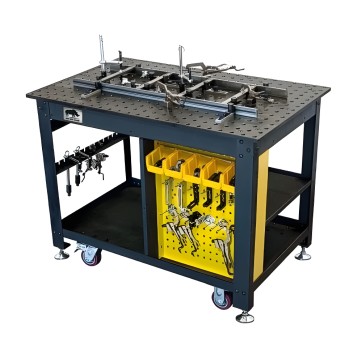
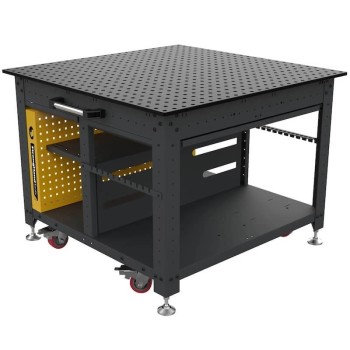
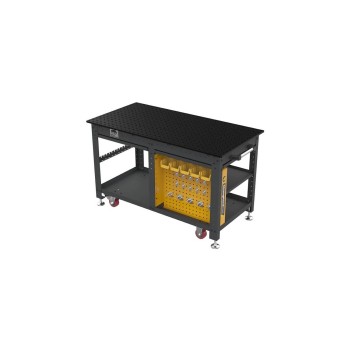
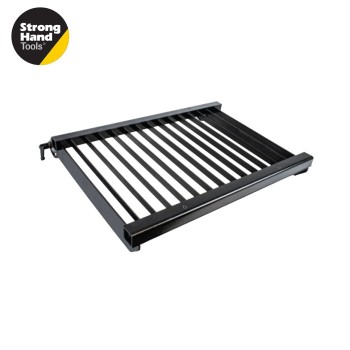
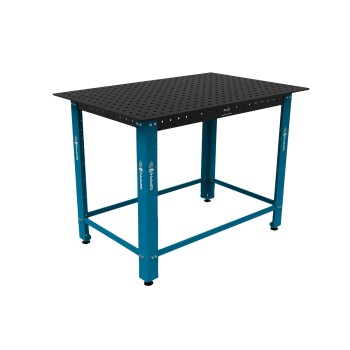
There are several formats. The fixed table, heavy and stable, is suitable for a permanent workshop. The kit welding table can be assembled and disassembled, practical for optimising space or transporting the work surface. The choice depends on your available space and frequency of use. In all cases, favour a top that is sufficiently thick to withstand heat and impacts without deforming.
Clamping and accessories
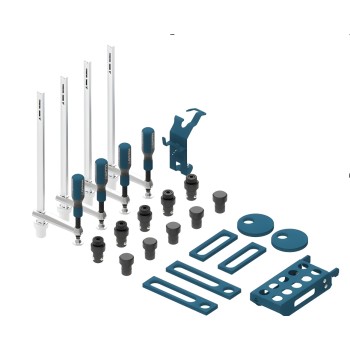
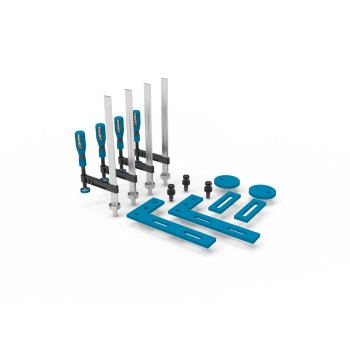
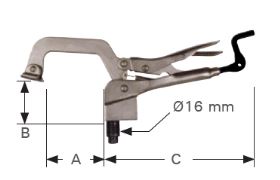
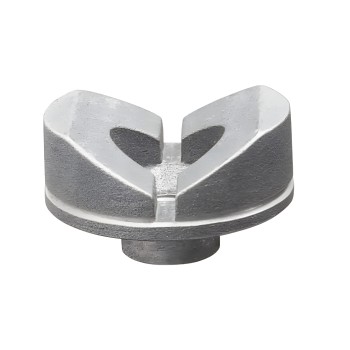
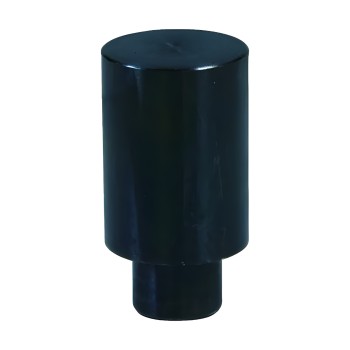
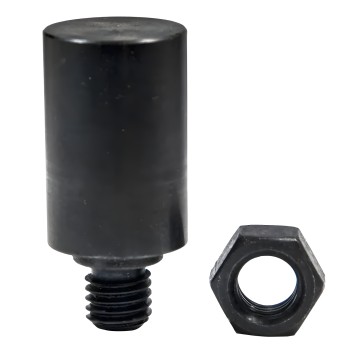
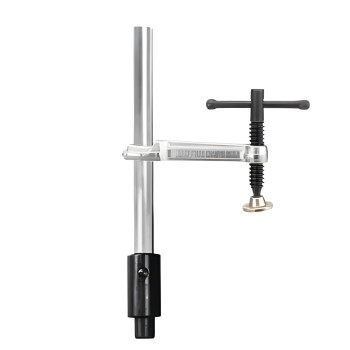
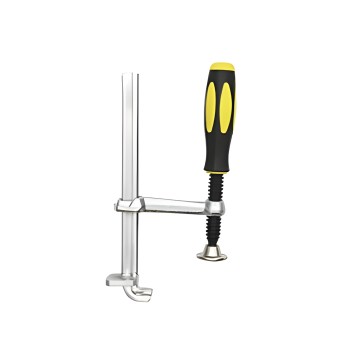
The value of a welding table lies as much in its accessories as in the top. Clamps, toggle clamps, positioning squares and stops allow pieces to be held in the desired position, hands-free. Good clamping prevents distortion caused by heat and guarantees the geometry of the assembly. Complete with positioning magnets and squares for common angles.
Safety and confined spaces
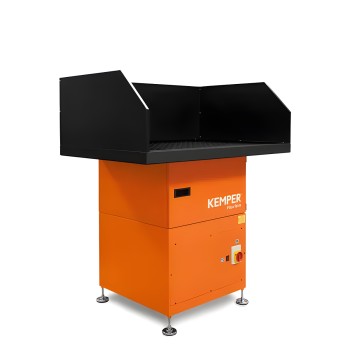
Working on a stable and non-flammable welding table reduces risks. The steel top is not affected by sparks or molten metal, unlike a wooden workbench. Make sure to clear the area of any flammable materials, and pair the table with good extraction or ventilation to evacuate welding fumes.
Top maintenance
To maintain a welding table, regularly clean the top and apply an anti-spatter product that prevents spatter from sticking to the surface and accessories. Avoid rust build-up by wiping the top dry, and store clamping accessories in a dry place. A well-maintained top remains flat and conductive, ensuring precise welds.
What size table should you choose?
The size of the welding table is chosen according to your workpieces and the available space. A compact table is sufficient for small assemblies and a limited workshop, while a large top accommodates bulky structures and several simultaneous setups. Also think about working height: a table at the right height reduces back fatigue during long sessions.
Welding table and assembly precision
The main advantage of a perforated welding table is repeatability. Thanks to the hole grid and clamping accessories, pieces are always positioned in the same way, guaranteeing precise angles and consistent series. For the manufacture of square assemblies (frames, chassis, gates), this precision makes all the difference. Combined with magnetic positioners, the table becomes a true assembly tool that limits distortion caused by heat and speeds up the work.
A lasting investment
When well chosen, a welding table is an investment that pays off quickly. It speeds up setups, improves the quality of assemblies and reduces rework caused by distortion. A thick top and a standard hole grid guarantee maximum longevity and compatibility with the clamping accessories available on the market. It is a central piece of equipment that durably structures the organisation of the workshop.
Our advice
To gain precision and comfort, a perforated welding table with a thick top and a set of clamping accessories is a worthwhile investment. Choose the format (fixed or kit) according to your space, and favour a standard hole grid to benefit from a wide choice of accessories. Browse our selection of welding tables and equip your workshop.
Frequently asked questions
What is a welding table used for?
It provides a flat, stable and conductive steel work surface on which to position, clamp and assemble pieces. Its conductivity allows the ground clamp to be connected, and its holes accommodate clamping accessories for precise assemblies.
What thickness of top should you choose for a welding table?
Favour a steel top that is sufficiently thick to withstand heat, impacts and clamping without deforming over time. The thicker the top, the flatter and more durable the table remains, especially for intensive use.
What is the difference between a fixed welding table and a kit table?
The fixed table is heavy and very stable, ideal for a permanent workshop. The kit table can be assembled and disassembled, practical for saving space or moving the work surface. The choice depends on your space and your usage.
Why is a welding table perforated?
The regularly spaced holes form a modular grid that allows clamps, stops, squares and positioners to be quickly fixed. The pieces are thus held in the desired position, hands-free, which improves precision and limits distortion.


 Italy
Italy
 Germany
 Netherlands
 Croatia
 Denmark
 Finland
 Greece
 Ireland
 Portugal
 Sweden
 Norway
 Bulgaria
 Estonia
 Latvia
 Lithuania
 Poland
 Czech Republic
 Romania
 Slovakia
 Slovenia
 Hungary



 2-year warranty